
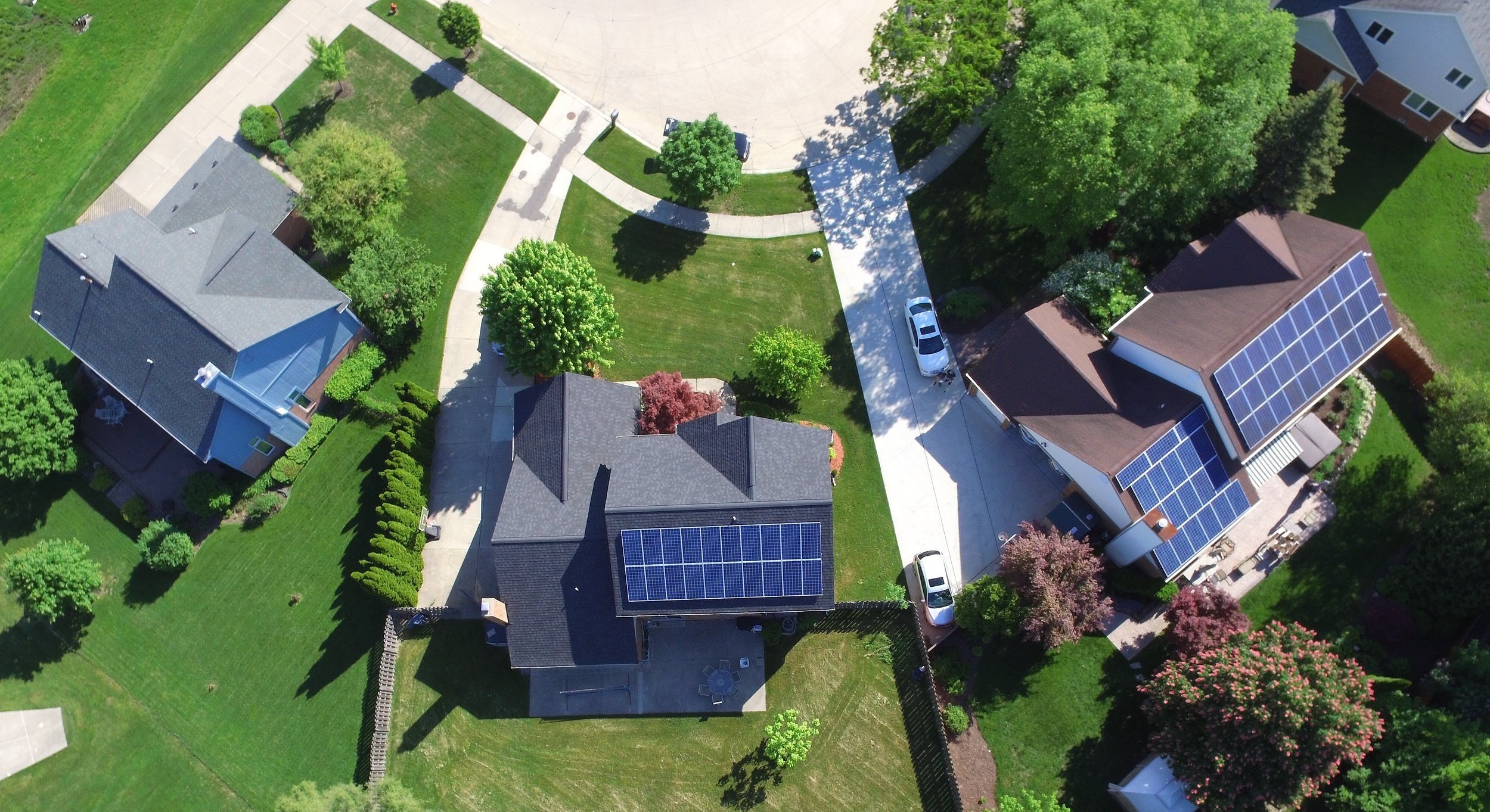

Solar panels can work on far more properties than most people expect, but roof space is still one of the first questions to answer. Whether you own a home, manage a commercial building, or operate a small business, the amount of usable roof area determines how large a system you can install and how much energy it can produce.
Total roof size is only part of the story. Orientation, layout, shading, and panel efficiency all play a major role. In many cases, professional system design can make a roof work even when it looks limited at first glance.
Key Takeaways
- Most Michigan properties, residential or commercial, need roughly 250 to 500 or more square feet of usable roof space for solar, but vary heavily depending on system size and goals.
- Roof layout, orientation, and shading often matter as much as total square footage.
- A professional site assessment can reveal usable space and production potential that property owners may overlook.
How Much Roof Space Is Needed for Solar Panels?
There is no single number that applies to every property. Solar systems are sized based on energy needs, available space, and how much of that space receives good sunlight throughout the year.
Average Roof Space Requirements
As a general rule, modern solar panels require about 15 to 20 square feet per panel. The total roof area needed depends on how many panels are installed and how they are arranged.
Typical ranges for Michigan properties include:
- Small residential systems may use 250 to 350 square feet of usable roof space
- Medium residential or small commercial systems often need 350 to 600 square feet
- Larger commercial systems can require 1,000 square feet or more, depending on energy demand
These figures assume clear, unobstructed roof areas. Roof features and required spacing can increase the amount of space needed.
How Many Solar Panels Can Fit on Your Roof?
To estimate how many panels your roof can support, installers look beyond simple square footage. Fire code setbacks, access pathways, vents, and roof edges all reduce usable space.
A professional layout considers:
- Required clearances along roof edges and ridgelines
- Space around vents, skylights, and HVAC equipment
- Panel spacing needed for drainage, airflow, and maintenance
Because of this, two roofs with the same square footage can support very different numbers of panels. Thoughtful design often makes a bigger difference than raw measurements.
Get a Free Quote & Inspection
Let our experts help you understand your roof's potential
How Much Power Can My Roof Generate?
Roof space determines how many panels you can install, but power output depends on system size and sunlight exposure.
Solar systems are measured in kilowatts, which represent their peak power capacity. Larger roofs can support larger systems, but production also depends on orientation, tilt, and shading.
In Michigan, a well-designed solar system can typically produce 1,100 to 1,300 kilowatt-hours per year for each installed kilowatt. That means a 10 kW system may generate roughly 11,000 to 13,000 kilowatt-hours annually.
Lack of access to direct sunlight on panels, obstructions and shading, or the bulk of your roof space being north-facing can all have a significant impact on generation.
Key Factors That Determine Solar Panel Layout and Spacing
Several variables influence how panels are arranged on a roof and how much space they require.
Your Energy Usage
The starting point for any solar design is energy consumption and the energy needs of your home or business. Reviewing past electric bills helps determine how large a system needs to be, which is a key part of our system design process.
Some property owners aim to offset all of their usage, while others choose partial offset to manage upfront costs or plan for future expansion.
Location and Sun Exposure
Michigan receives ample sunlight for solar, even with cloudy winters. Systems are designed to account for seasonal changes and lower winter sun angles.
While production is higher in summer, annual output remains strong when systems are properly designed for local conditions.
Roof Orientation and Tilt
South-facing roof areas typically produce the most energy, but east- and west-facing roofs can still perform very well.
Installers adjust panel tilt and placement to maximize exposure when ideal orientations are not available.
Solar Panel Efficiency and Technology
Higher-efficiency panels generate more power per square foot. These panels can reduce space requirements, which is especially helpful for smaller roofs or properties with obstructions.
Premium panels often make sense when roof space is limited or when long-term energy production is a priority.
At Strawberry Solar, we are certified to work with all of the leading solar equipment brands and have decades of experience to help us determine the best options for you.
Roof Layout and Obstructions
Roof features reduce usable space and influence panel placement. Common obstacles include:
- Plumbing vents and chimneys
- Skylights and dormers
- Rooftop mechanical equipment
- Shading from trees or nearby buildings
These factors and others are all evaluated carefully, as even partial shading can affect performance or alter the design.
Budget and Long-Term Goals
System size is often a balance between available space, upfront investment, and long-term savings. Keeping your return on investment in mind throughout your planning and working with our expert designers is crucial. Many property owners also plan for future needs such as electric vehicles or expanded operations.
Designing with growth in mind can prevent costly changes later.
Why Professional Roof Measurements from Solar Experts are Required
Online tools and satellite imagery can provide rough estimates of roof size, but they often miss important details.
Do-it-yourself measurements may overlook:
- Required code setbacks
- Roof pitch and elevation changes
- Obstructions that reduce usable area
A professional site assessment includes detailed measurements, shading analysis, and structural review. This approach provides far more accurate results and realistic production estimates.
Is Your Roof a Good Candidate for Solar?
Before focusing on square footage, it helps to confirm whether a roof is suitable for solar at all.
Basic checks include:
- Adequate sun exposure for most of the day
- Sufficient structural capacity
- A roof layout that allows compliant panel placement
In some cases, roof size is adequate but other factors, such as excessive shading or structural limitations, are the real barriers.
Roof Condition Requirements for Solar
Roof condition plays a major role in long-term system performance.
Installers evaluate:
- Roof age and remaining lifespan
- Roofing materials and attachment methods
- Structural integrity and load capacity
If a roof is near the end of its life, replacing the roof before installing solar often makes financial sense and avoids future complications.
However, we do also offer solar equipment tear down and reinstalls in the event that a roof replacement is needed after solar is installed on your property. It does come at a cost, of course, but is an intentional decision many homeowners and businesses make.
Why Michigan Property Owners Choose Strawberry Solar
Strawberry Solar works with both homeowners and commercial property owners across Michigan, providing clear guidance, dependable service, and expert solar installation.
With Strawberry Solar, you get:
- Local expertise and familiarity with Michigan conditions
- Custom system designs tailored to each property
- Turnkey permitting, engineering, and installation
- Free roof and solar assessments for homes and businesses
The goal is to make solar simple, transparent, and built to last.
Frequently Asked Questions
Most modern solar panels are roughly 65 to 75 inches long and 39 to 45 inches wide. Wattage varies by model and efficiency, with higher-efficiency panels producing more power in the same amount of space.
Other types of solar panels are often similar in size but may be designed for different mounting systems or performance characteristics.
Many systems need between 250 and 500 or more square feet of usable roof space. Larger commercial systems may require significantly more area, depending on energy demand.
The key to determining the space required is to analyze how much of the surface area is* usable* and how well optimized it is for solar energy generation.
Yes. Simple roof shapes are easier to design around, but complex roofs can still support solar with careful planning and layout optimization.
Partial shading can reduce output, but modern technologies such as module-level power electronics help minimize losses. Each site is evaluated individually to determine feasibility.
Commercial solar energy systems often operate on a larger scale and may use flat roofs or ballasted mounting systems. The design principles are similar, but system size, electrical integration, and permitting requirements can differ.
Building and fire codes require setbacks along roof edges and ridgelines. These rules ensure safe access and proper ventilation, but they do reduce usable roof area slightly.
Utilities place limits on system size and how much energy can be exported to the grid. Whether or not a system includes solar battery storage can also impact this limit. Oversizing a system does not always increase savings, so systems are designed to match realistic energy use and goals.
When roof space is limited, options may include higher-efficiency panels, using multiple roof sections, or installing ground-mounted or carport systems if space allows.